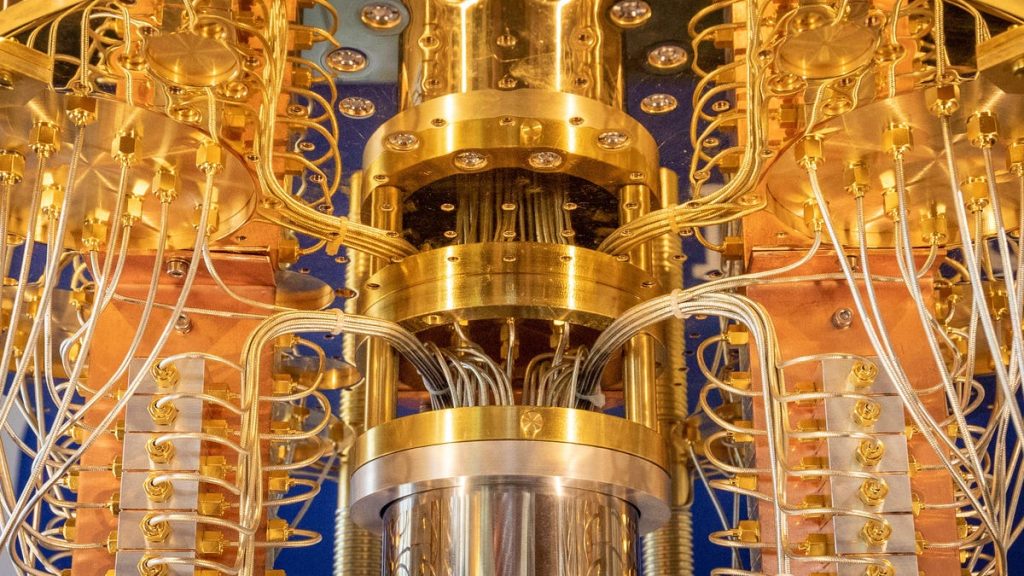
Quantum computing stands at the forefront of technological innovation, promising to revolutionize computing as we know it. Unlike classical computers, which rely on bits to process information in binary form (0s and 1s), quantum computers leverage the principles of quantum mechanics to perform calculations at speeds unimaginable with traditional hardware. In this blog, we’ll explore the future of quantum computing and the transformative impact it’s poised to have on various industries and scientific endeavors.
Quantum Computing: A Paradigm Shift in Computing
Quantum computing harnesses the unique properties of quantum mechanics, such as superposition and entanglement, to perform computations in ways that defy classical computing limitations. Instead of bits, which represent either 0 or 1, quantum computers use quantum bits, or qubits, which can exist in multiple states simultaneously, exponentially increasing computing power and enabling parallel processing of vast amounts of data.
Overcoming Computational Challenges
One of the most significant challenges in realizing the full potential of quantum computing lies in maintaining qubits’ delicate quantum states. Quantum systems are highly susceptible to environmental noise and decoherence, which can cause errors in calculations. However, researchers are making strides in developing error-correction techniques and building more stable quantum hardware, bringing us closer to practical quantum computers.
Applications Across Industries
The potential applications of quantum computing span a wide range of fields, from cryptography and cybersecurity to drug discovery and materials science. In cryptography, quantum computers have the potential to break conventional encryption methods, prompting the development of quantum-resistant cryptographic algorithms to secure sensitive data in the post-quantum era.
In drug discovery and materials science, quantum computing offers the ability to simulate molecular structures and interactions with unprecedented accuracy and speed, accelerating the discovery of new drugs, materials, and chemical processes. Quantum computers can also optimize complex supply chains, model climate systems, and revolutionize artificial intelligence and machine learning algorithms, opening up new frontiers in scientific research and innovation.
Quantum Supremacy and Beyond
Recent milestones in quantum computing, such as Google’s demonstration of quantum supremacy – the ability of a quantum computer to solve a problem that would be infeasible for classical computers – have garnered widespread attention and excitement. However, achieving practical quantum advantage, where quantum computers outperform classical counterparts on real-world applications, remains a significant milestone on the path to realizing the full potential of quantum computing.
Conclusion
The future of quantum computing holds boundless possibilities, from solving complex optimization problems and simulating quantum systems to revolutionizing industries and driving scientific breakthroughs. While practical quantum computers are still in their infancy, rapid advancements in hardware, software, and algorithms are propelling us closer to realizing the transformative potential of this revolutionary technology. As we stand on the brink of a quantum computing revolution, the journey ahead promises to unlock new realms of discovery and innovation, ushering in a new era of computational power and scientific exploration.